

More than 100,000 Americans are waiting for an organ transplant. About 90,000 of them need a kidney. Thousands die each year before one becomes available, and the number of living kidney donors has stagnated for two decades, holding near 6,000–6,500 donors a year.
That gap is the starting point for one of the most contested questions in health policy: would paying people to donate close it, or would payment corrode the thing that makes donation work? For its May Conversations on the Business of Health webinar, the Hopkins Business of Health Initiative convened four people who have spent their careers on different sides of that question and asked them to argue it out over a single, concrete proposal: the End Kidney Deaths Act, a bipartisan bill that would create a 10-year pilot offering a refundable federal tax credit of $50,000, paid over five years, to people who donate a kidney to a stranger.
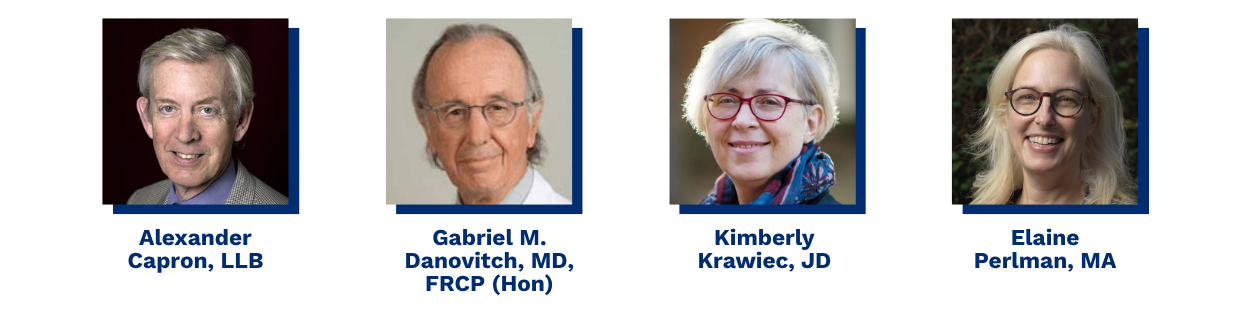
The panelists were Alexander Capron, LLB, Scott H. Bice Chair Emeritus in Healthcare Law, Policy and Ethics, USC Gould School of Law; Gabriel M. Danovitch, MD, FRCP (Hon), Internal Medicine and General Medicine, Nephrology, Olive View-UCLA Medical Center; Kimberly Krawiec, JD, Charles O. Gregory Professor of Law, and Glynn Family Bicentennial Professor of Law, University of Virginia; and Elaine Perlman, MA, President, Coalition to Modify NOTA and Executive Director, Waitlist Zero.
The cost of doing nothing
Elaine Perlman, president of the Coalition to Modify NOTA and executive director of Waitlist Zero, donated a kidney to a stranger in 2020. Her son did the same. She opened by insisting that the current system's defenders rarely reckon with the costs of waiting.
“550,000 Americans are currently suffering on dialysis, and yet only 27,000 people receive kidney transplants every year.”
- Elaine Perlman
She framed the shortage as a choice the country keeps making, not a tragedy it endures.
“As Americans, we do not ration insulin; we do not ration chemotherapy, because we pay people to produce them. But with kidneys, we expect the supplier to work entirely for free, and every year, thousands of Americans die because of that decision.”
- Elaine Perlman
For Perlman, the bill's logic is continuous with how the country already thinks about socially valuable acts. “Tax credits exist to encourage socially beneficial behavior,” she said, “so surely we can provide a tax credit to someone who saves a stranger's life with a kidney donation.” She rejected the idea that leaving the system unchanged is the cautious choice.
“The status quo is not ethically neutral. Thousands of people are dying every year from a solvable shortage; that's not a neutral outcome. It's a lousy policy choice.”
- Elaine Perlman
She argued the bill is also fiscally responsible: moving a patient from dialysis to transplant can save Medicare on the order of half a million dollars, and existing transplant centers would continue to screen donors exactly as they do now. “A kidney transplant is medicine,” she said. “It simply happens to exist inside another human being.”
The risk of crowding out voluntary donors
The debate did not break down the way arguments about organ markets usually do. No one defended an open market in kidneys, and no one denied the human cost of the shortage. Alexander Capron, University Professor Emeritus at USC and a leading scholar in health law and bioethics, set the terms early.
“The question is not whether there are ethical problems with this, but whether the desire to increase donation will actually be served by this proposal.”
- Alexander Capron
His objection was empirical. Paying for organs, he argued, does not create a new supply; it drives out the donations people would have made freely. He pointed to a string of natural experiments around the world. When patients in Hong Kong could obtain kidneys through payment in mainland China, the share of transplants from living donors fell sharply, as family members who might have donated stepped back. When Israel stopped paying for its patients to buy organs abroad in 2008, its own donation rates climbed. Iran, long cited by advocates as the country that eliminated its waiting list through payment, sits far down the international rankings, while the highest donation rates are in countries like the United States and Spain, where donation is unpaid.
“It turns out that if you have payments, they will crowd out the voluntary donations, and this is going to be a problem if we go to payments. There's no reason to think that in the long run, we will, in fact, end kidney deaths.”
- Alexander Capron
He also pressed on the specifics of the proposal, starting with its central figure.
“Why $50,000? It's a totally arbitrary number, and people like Frank McCormick, whom you cited, Elaine, have already said, if that amount doesn't work, we'll increase it.”
- Alexander Capron
And he warned that the experiment could not be undone. If a decade of payment produced the crowding-out he expects, he argued, there would be no path back. “Can we possibly think of going back to a system where we don't pay for organs? We will have destroyed the transplant system of voluntary donations.”
Is altruism enough of a motivator?
Gabriel Danovitch, Emeritus Professor of Medicine at UCLA's David Geffen School of Medicine and emeritus medical director of its kidney transplant program, has spent four decades working with donors and recipients. He argued that the benefit an altruistic donor receives, the lasting sense of having done something meaningful, is precisely what money erodes.
“It's been shown in Iran, it's been shown in other places, too, that there actually is an impact on self-worth, and an impact on depression, of people who donate because of financial reasons, as opposed to people like Elaine and her son, who've donated out of altruism and out of love.”
- Gabriel Danovitch
Danovitch also raised concerns that a large tax credit could influence clinical decisions about donor eligibility in the donor evaluation process, including weighing cases involving borderline health conditions such as diabetes or hypertension against the benefit of donating. He warned that the bill could have broader consequences for the transplant system, not only in the United States, but in countries that have followed the American model and could use it to justify far more dangerous payment schemes.
“I've used the term Trojan horse to describe this kind of legislation. Because it looks so attractive. But once you allow that Trojan horse to open up NOTA, we are opening up a Pandora's box of problems that will actually undermine the system we have in place.”
- Gabriel Danovitch
His prescription was to push harder on what he considers the system's proven tools. “We must continue to promote altruistic living donation, remove all the disincentives to donation, incentivize through education, incentivize through public trust,” he said, and expand deceased donation to supply the hearts and livers that living donors cannot.
What does it mean to “make donors whole”
Kimberly Krawiec, the Charles O. Gregory Professor of Law at the University of Virginia, studies “taboo trades,” exchanges that societies contest or forbid. She argued the panel was stuck on a question that does not actually decide anything.
“The relevant question is not whether kidney donation should be paid, or unpaid, or compensated, or uncompensated, but what sorts of material recognition are permissible under what institutional design, and with what protections.”
- Kimberly Krawiec
Krawiec was careful to separate the proposal from the kind of organ market its critics fear. Because the credit runs through the tax system rather than through bargaining between patients and donors, she argued, it sidesteps the central objection to commercializing organs.
“I would distinguish sharply between a state-administered donor benefit, which is what this is, and a private market in kidneys. The former may still raise some hard questions, but it does not raise the same questions as a buyer and seller negotiating over an organ.”
- Kimberly Krawiec
That framing, a benefit administered by the state rather than a price set between two parties, let her treat the proposal as a question of design rather than a line that should never be crossed. The same logic shaped her objection to the phrase nearly everyone in the debate claims to support: making donors whole.
“Kidney donation imposes real costs that do not appear on a receipt. Surgical risk, pain, recovery time, disruption to family life, anxiety, lost leisure, and the burdens of medical testing and follow-up.”
- Kimberly Krawiec
Reimbursing only documented expenses, she said, favors some donors over others. “A narrow reimbursement model can look ethically modest while actually reproducing inequalities in what losses we think count,” compensating wage earners while overlooking caregivers, students, and retirees. She found common ground by treating the bill as what it claims to be.
“These objections are serious. I don't intend to minimize them in any way, but they are not arguments against experimentation. They are arguments for designing the experiment very carefully and learning from it.”
- Kimberly Krawiec
Where they landed
On the central question, the panel did not converge. Everyone agreed on removing the financial barriers that still penalize donors, including lost wages, travel costs, and the absence of paid recovery leave. The divide was over what lies on the other side of that line. For Capron and Danovitch, a $50,000 credit crosses from removing barriers into paying for organs, with consequences they believe the global evidence already predicts. For Krawiec, that line is less a moral boundary than a design question the country has refused to test. For Perlman, the test is the entire point, because the alternative is another decade of preventable deaths.
Asked in closing how much public opinion should weigh in a decision like this, the panel split again, cleanly. Perlman: “I think it's incredibly important, because by following public opinion, we will also maintain trust.” Danovitch: “We should be in the business of educating, not surveying the public.” Krawiec positioned herself between them. Public trust matters because the transplant system depends on it, but it “doesn't tell us much about what is ethical and what isn't.” And Capron returned to the worry underneath his whole argument, emphasizing that “once we start paying for donation, the number of people who will think it's appropriate to give an organ will decrease.”
"One day," Perlman said, "we will look back on this era and wonder why we waited so many decades to end the kidney shortage."
Whether that day comes through this bill, or through the prevention and deceased-donor efforts its critics favor, the panel made one thing clear: the choice is not between a perfect system and a risky experiment. It is between two different sets of risks, and the people who bear them are already in line.
Moderator
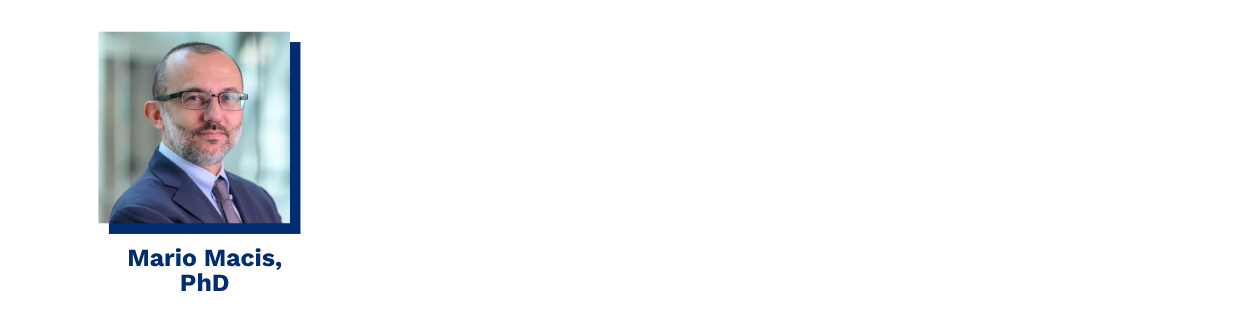
The panel was moderated by Mario Macis, PhD, a professor at the Johns Hopkins Carey Business School and member of the HBHI leadership team, whose research examines when and why people accept market-based solutions to social problems.
Resources shared by panelists
An opinion piece by Mueller et al. from JAMA: Link here
A letter to the editor from Elaine Perlman: Link here
The authors’ response to the letter: Link here
Markets in Human Organs for Transplantation
Controversy and Contention: Link here
The Trojan Horse of Kidney Transplantation Returns
A Review and Call for Financial Neutrality: Link here
End Kidney Deaths Act summary: Link here
The list of 50+ supportive organizations, the legislative text, the podcast with Kim and Elaine, and the Niskanen Center's economic analysis of the End Kidney Deaths Act
“Conversations on the Business of Health” is a series of one-hour webinars hosted by HBHI that engages leaders from business and academia on the cutting edge of improving American healthcare.
Moderated by faculty members and jointly hosted by the Johns Hopkins Bloomberg School of Public Health, the Carey Business School, the School of Nursing, and the School of Medicine, the series is open to all. Learn more here.